
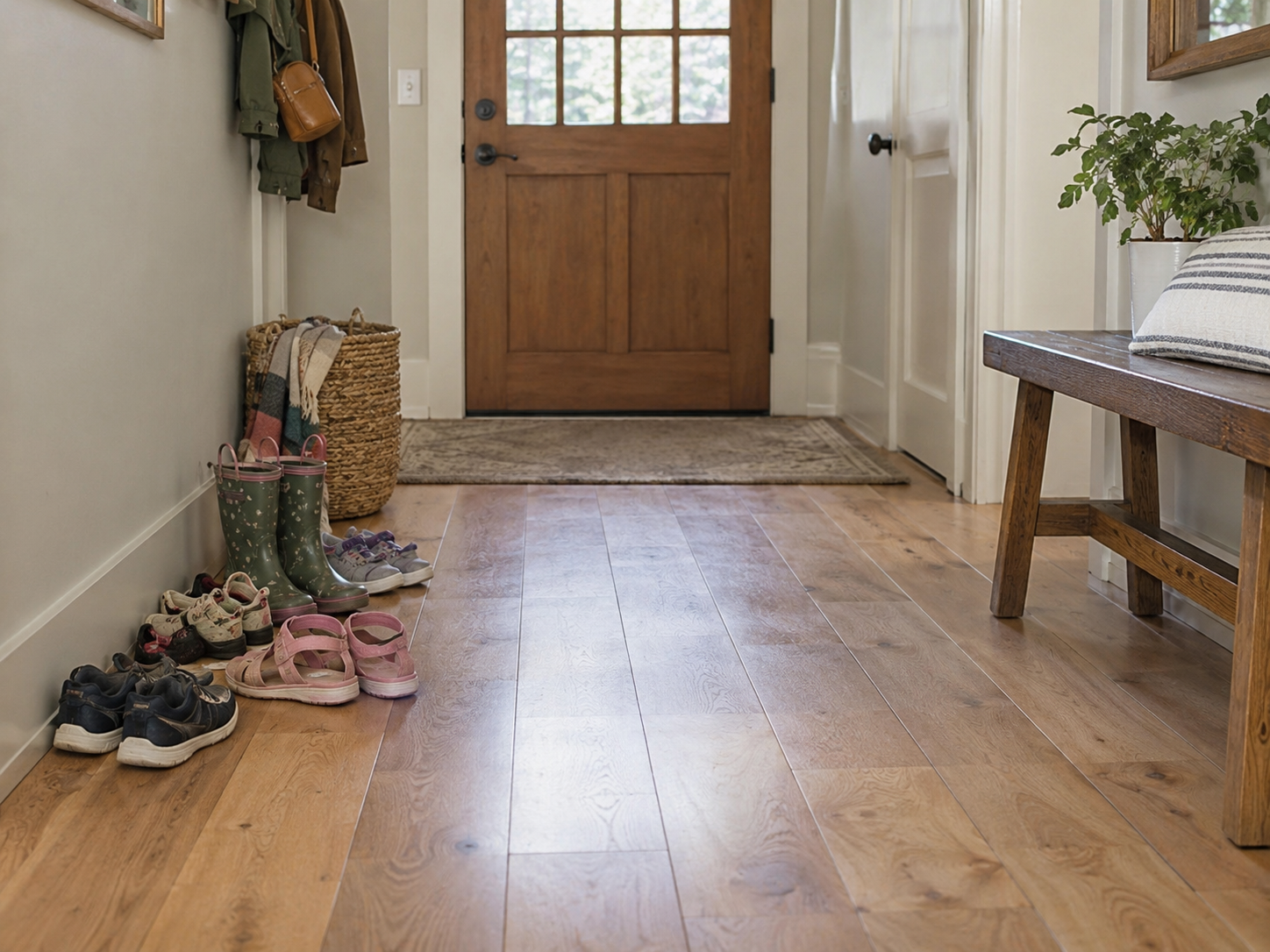
Kids’ shoes have a habit of multiplying near the front door.
Sneakers from school, sandals from yesterday, rain boots that may be needed tomorrow, and one mysterious shoe with no partner can make even a tidy entryway look messy.
The answer is not necessarily a bigger shoe rack.
In a small space, the biggest improvement often comes from deciding which shoes actually need to live by the door.
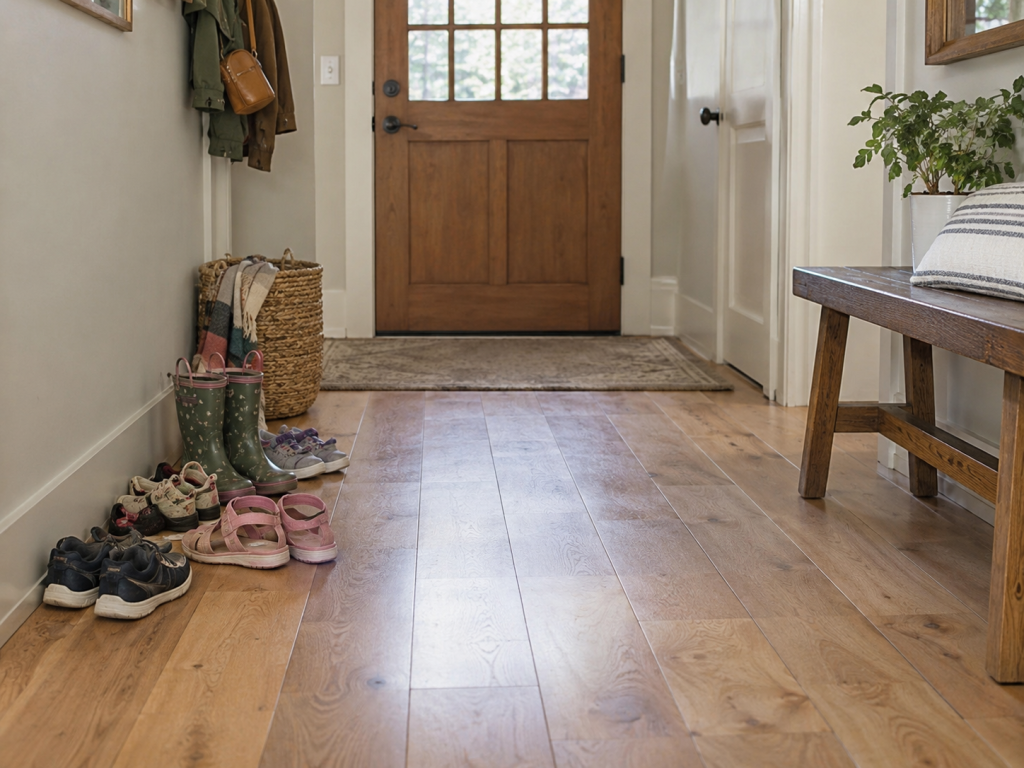
Clear the Floor First
Take every pair away from the entryway for a few minutes.
It is much easier to see the available space when you are not looking around a pile of shoes.
Then bring back only the pairs that are being worn regularly right now.
That may be one everyday pair, one school pair, and perhaps weather-specific shoes depending on the season.
Everyday Shoes Deserve the Easiest Spot
If a child wears the same sneakers five days a week, those shoes should not be hidden behind three pairs that are hardly ever used.
Give the most frequently worn pair the easiest position to reach.
For younger children, a low basket, open cubby, or simple spot underneath a bench can be easier to use than a tall rack.
A storage system only works if the child can realistically put the shoes back.
A useful test:
Can a child take the shoes out and put them back without moving anything else?
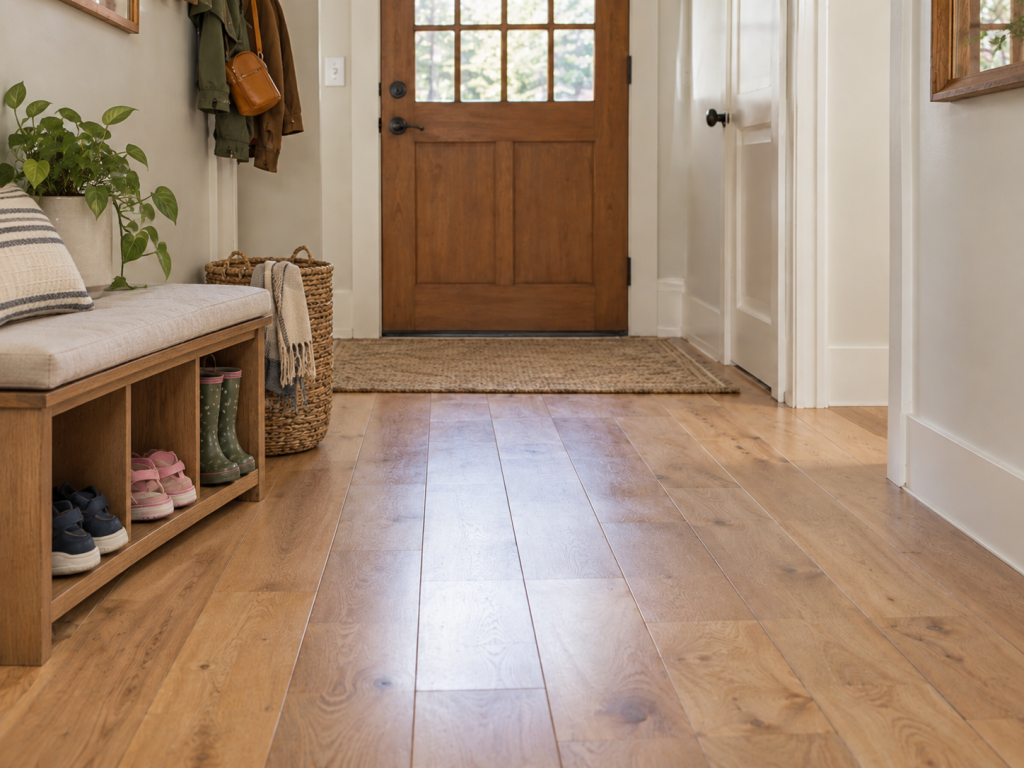
Seasonal Shoes Can Live Somewhere Else
Snow boots do not need prime entryway space in warm weather.
Neither do sandals in the middle of winter.
Moving clearly seasonal footwear out of the everyday area immediately creates more room without buying anything.
The same idea applies to shoes that are slightly too large and waiting for the next growth spurt.
Give Each Child a Defined Space
In a home with more than one child, shared shoe storage can quickly turn into a guessing game.
You do not need personalized signs or elaborate labels.
One basket, one cubby, or one section of a shelf per child may be enough.
The boundary matters more than the container.
When that space is full, it is a useful sign that something needs to leave rather than another pair being squeezed on top.
Keep the “One Lost Shoe” Problem Small
When a single shoe appears, avoid leaving it in the middle of the floor indefinitely.
A small temporary spot for unmatched shoes keeps them visible without letting them become part of the general clutter.
If the partner does not turn up after laundry, bedrooms, the car, and school bags have been checked, it may be time to make a decision about the remaining shoe.
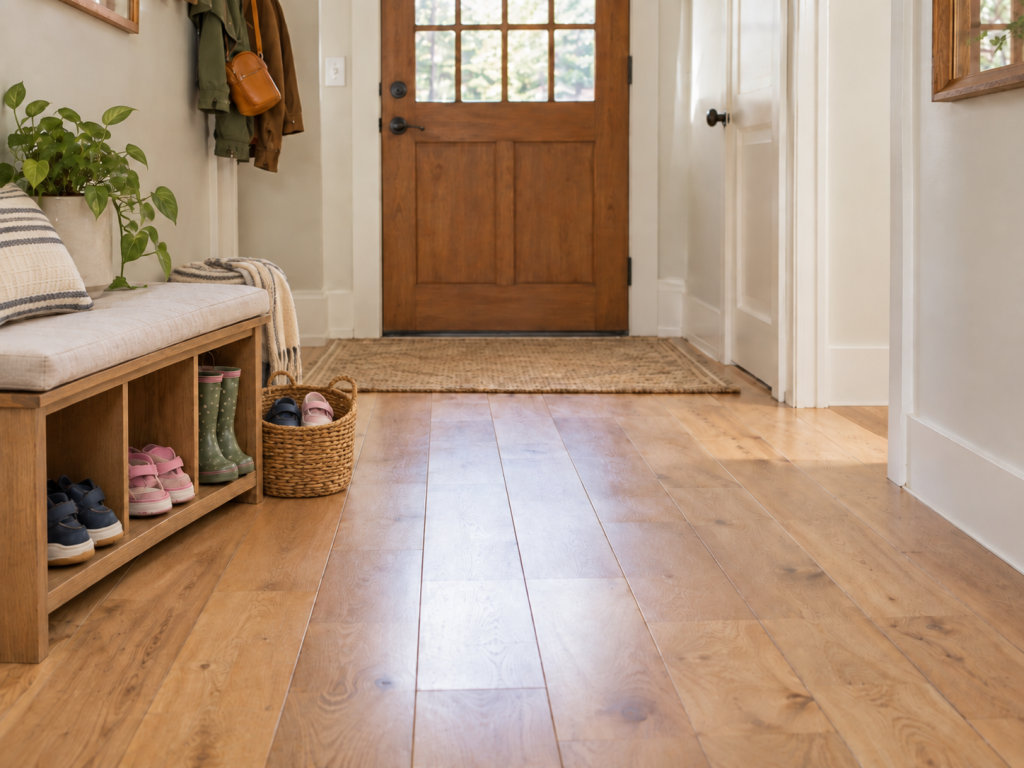
The Best Entryway System Is the One Everyone Can Use
A beautiful organizer is not very helpful if shoes still land on the floor beside it.
Keep the system low, simple, and close to the place where shoes naturally come off.
And before buying another storage piece, reduce the number of pairs competing for that small area.
A small entryway can feel surprisingly calm when it only has to hold the shoes the family is actually using.
Leave a Reply