

Kids have a funny way of outgrowing clothes almost overnight. One week a pair of pajamas fits perfectly, and the next week the sleeves suddenly look too short.
If you’re trying to organize kids’ clothes by size, a simple system is usually much easier to maintain than a closet filled with too many categories. When different sizes, seasons, and hand-me-downs are all stored together, even a small pile of clothes can turn into a surprisingly messy closet. The good news is that you do not need a huge closet or a complicated organizing system. A few simple zones can make it much easier to see what fits now, what will fit soon, and what is ready to leave the closet.Start With Just Three Groups
Before buying more baskets or closet organizers, take the clothes out and sort them into three simple groups. 1. Fits now These are the clothes your child can comfortably wear today. 2. Next size These are clothes that are a little too big but will probably be useful soon. 3. Outgrown These are clothes that are already too small. That is really enough to get started. It can be tempting to create separate piles for every size, season, color, and type of clothing, but too many categories often make a small closet harder to maintain. A simple system is usually the one that lasts.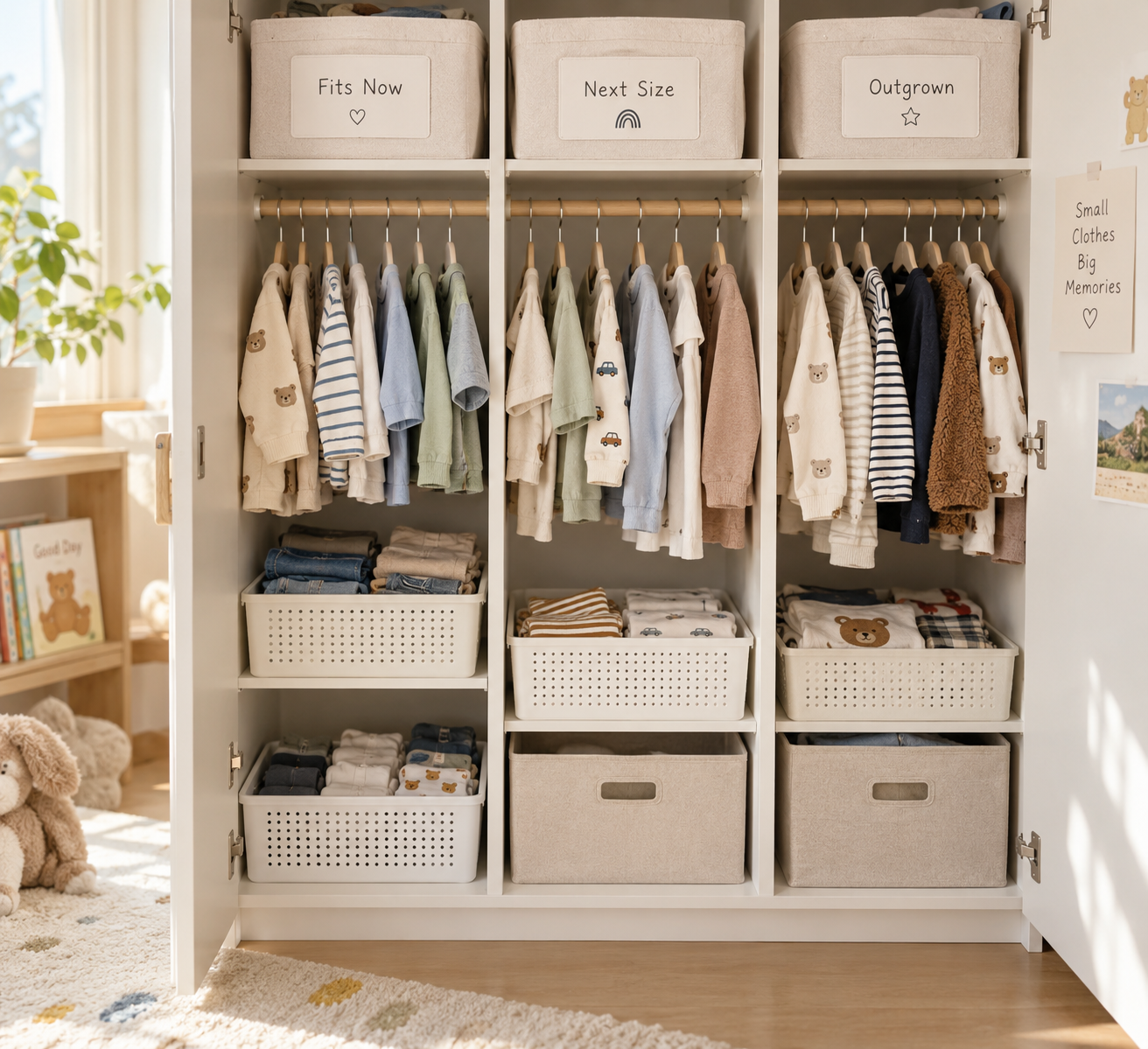
Give the Clothes That Fit Now the Best Spot
The clothes your child wears every day should be the easiest ones to reach. Think about the pieces you grab most often: T-shirts, leggings, pajamas, school clothes, socks, and everyday layers. Those items belong in the most convenient drawers, shelves, or hanging space. Clothes that will not fit for another few months do not need the same prime location. They can sit on a higher shelf, in a labeled bin, or toward the back of the closet. A useful little rule is:The more often something is used, the easier it should be to reach.
It sounds simple, but this one change can make mornings much easier. If you’re trying to organize kids’ clothes by size, keeping the system simple is usually much easier than creating a separate section for every season and clothing type.Keep the Next Size Separate
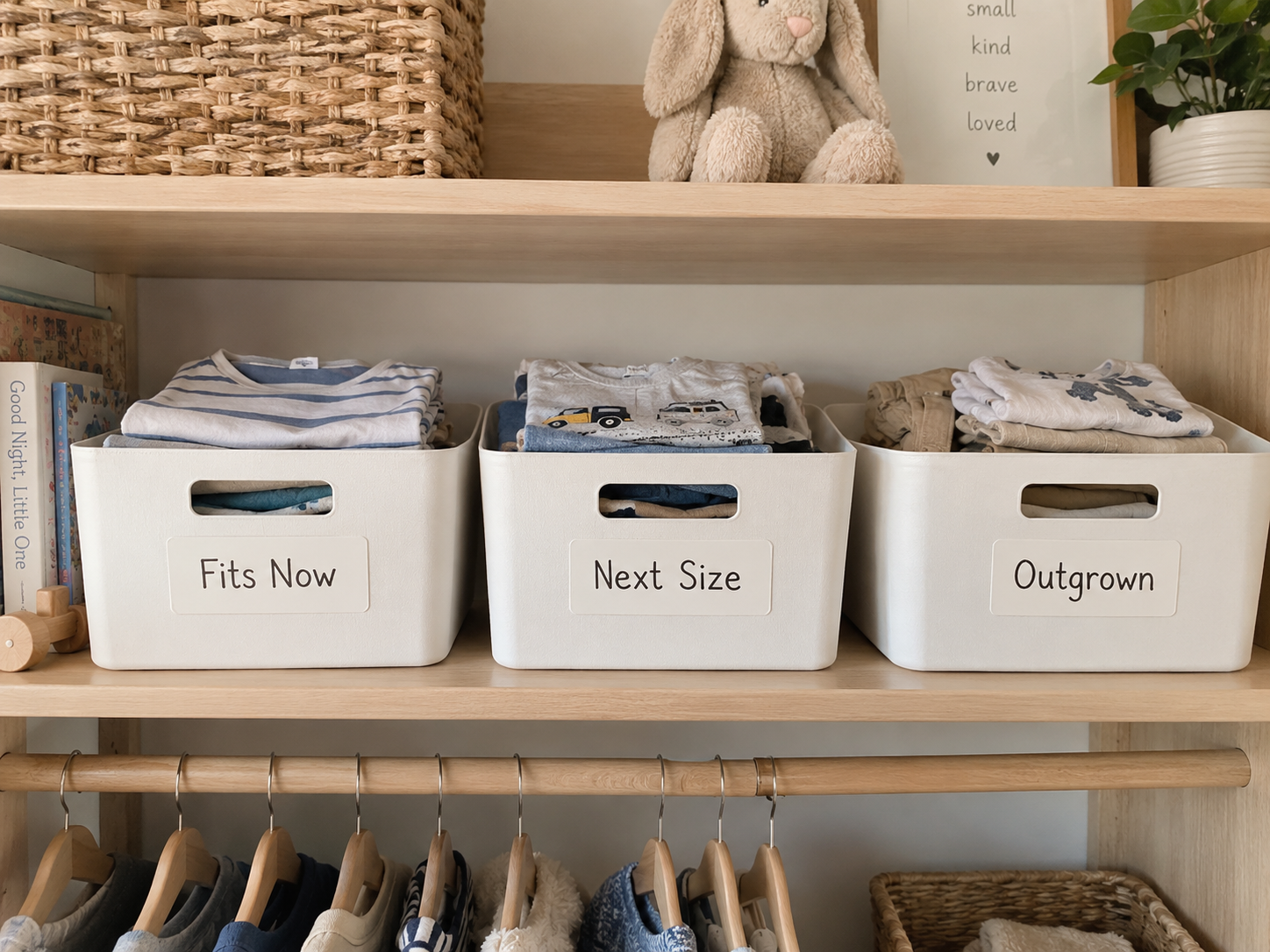
Future-size clothes are helpful, especially when they come from older siblings, friends, family members, or a good sale. The problem starts when those clothes get mixed in with the clothes being worn now. Instead of digging through several sizes every morning, give the next size its own small space. A single bin labeled Next Size is often enough. If you want to be more specific, you can add the actual size, such as:Next Size — 5T
There is no need to keep every future size in the main closet. If you have clothes that will not fit for a year or more, store them somewhere else if space allows. The everyday closet should mainly hold clothes that are useful now or will be useful soon.Organize by Size Before Organizing by Color
A closet arranged by color can look beautiful, but for growing children, size is usually much more useful. Once the correct size is together, you can separate clothes into simple types:- Tops
- Bottoms
- Pajamas
- Outerwear
- Special-occasion clothes
Do Not Let Storage Bins Become Another Place to Hide Clutter
Storage bins are useful, but only when each one has a clear purpose. A bin labeled Next Size should not slowly become a home for extra shoes, old blankets, toys, and clothes waiting to be donated. If a container is so full that you have to press everything down just to close the lid, it is probably time to sort through it again. Leave a little breathing room. You should be able to take one item out without emptying the entire container onto the floor. Clear bins can be helpful because you can see what is inside. Fabric bins can look softer and tidier. Either option can work well. A clear label matters more than the type of container.Keep One Small Bin for Outgrown Clothes
This may be the simplest part of the whole system, but it makes a big difference. Keep one small basket or bin nearby for clothes that no longer fit. When you notice that a shirt is too short or a pair of pants has become uncomfortable, place it in the outgrown bin instead of putting it back in the drawer. Once the bin is full, decide what comes next.- Save the clothes for a younger child
- Pass them along to family or friends
- Donate items that are still in good condition
- Recycle or repurpose clothing that is too worn to reuse
Check the Closet When the Seasons Change
Kids grow quickly, so even the best closet system needs a little reset now and then. A change of season is a natural time to look through everything. The clothes in the Next Size bin may finally fit. Some current clothes may be ready for the outgrown bin. Warm-weather clothes may need to move forward, while heavier items can move back. This does not need to become an all-day organizing project. A short closet check every few months is usually much easier than waiting until drawers no longer close.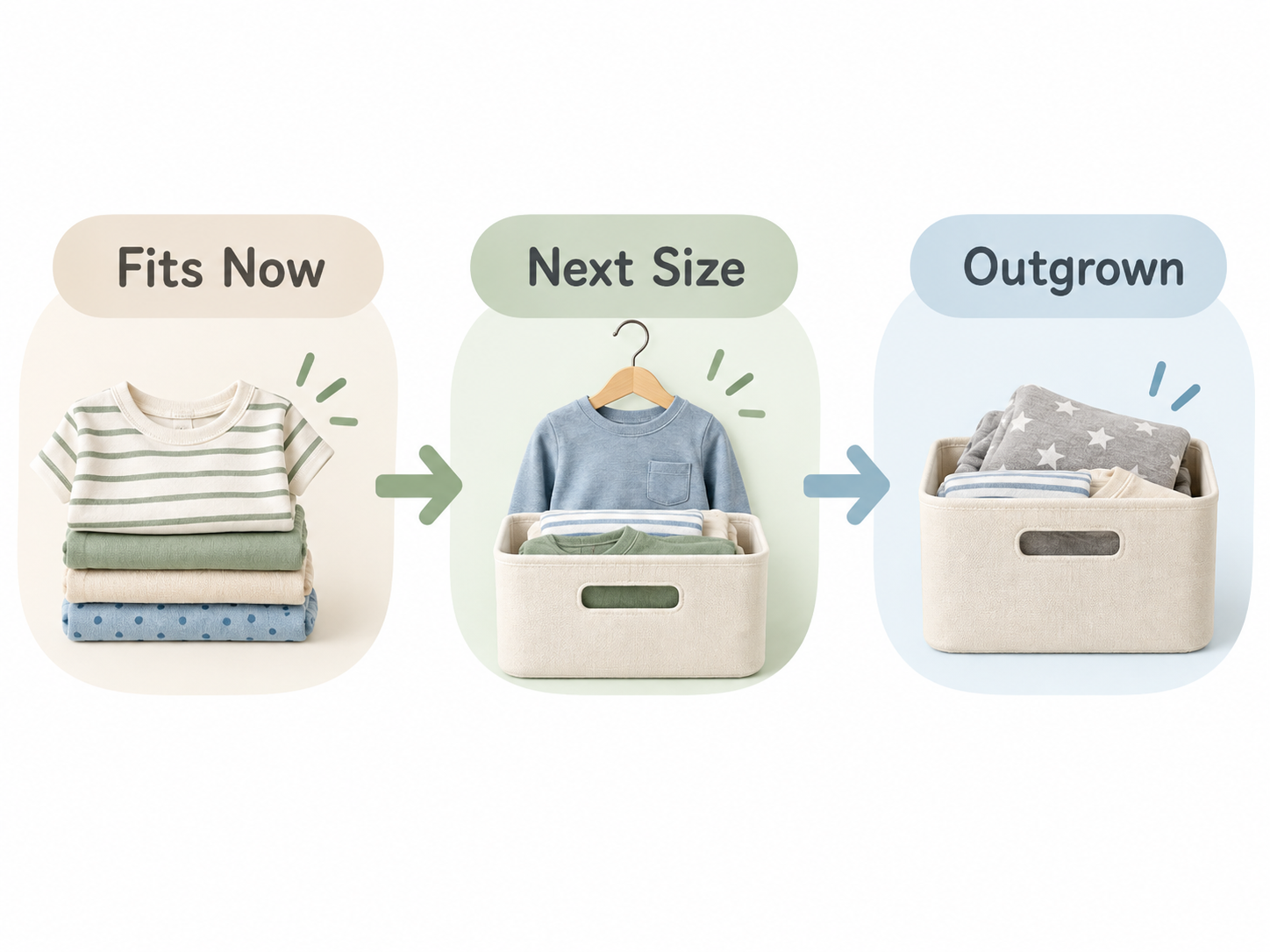
A Small Closet Does Not Need a Complicated System
A perfectly organized closet is lovely to look at, but a closet that is easy to use is even better. You do not need matching hangers, expensive storage furniture, or dozens of labels. Start with three places:Fits now. Next size. Outgrown.
Once those three groups have a home, the rest becomes much easier. And when you can quickly see what your child already has, it becomes easier to avoid buying another shirt, pair of pajamas, or sweater that was already hiding in the back of the closet. Simple systems are often the easiest ones to keep going — especially in a busy family home.