

One of the strange things about kids’ clothes is how quickly the “too small” pile appears. A shirt that fit comfortably a few weeks ago can suddenly look short, while perfectly good pajamas end up sitting in a drawer simply because nobody has had time to decide what to do with them.
That is usually how outgrown clothes begin taking over a closet. Not all at once, but one little pile at a time. If you are wondering how to store outgrown kids’ clothes without filling every shelf and spare corner in the house, the easiest approach is to deal with them before they disappear into random bags and boxes. The goal is not to save everything. It is to make the clothes you do want to keep clean, easy to identify, and simple to find again later.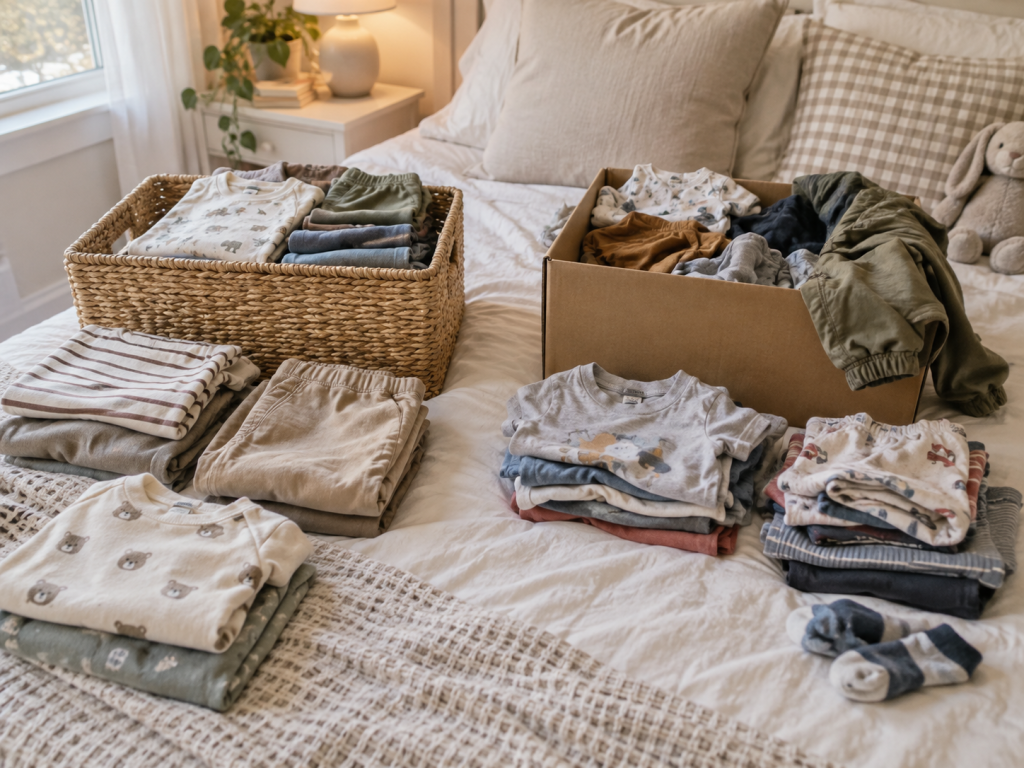
Do Not Put Clothes Straight Into a Storage Box
When a child outgrows something, the quickest solution is often to toss it into a bag and promise to sort it later. That works for a little while. Then the bag fills up, another bag appears, and eventually nobody remembers what is inside either one. Before anything goes into long-term storage, spread the clothes out somewhere you can see them clearly. A bed, clean floor, or dining table is enough. Look at each piece with one simple question in mind: Would I actually want to use this again? Clothes with stubborn stains, stretched necklines, broken zippers, or fabric that has become very worn may not be worth taking up storage space. On the other hand, everyday basics in good condition, favorite outfits, seasonal jackets, and pieces that may be useful for a younger child are usually much easier to justify keeping.Wash Everything Before You Pack It Away
Clothes that look clean can still have small food marks, body oils, or spills that become more noticeable after sitting in storage for months. Washing them before packing makes the next stage much easier. Make sure everything is also completely dry before it goes into a closed container. Even slightly damp fabric is something you do not want sealed away for a long period of time. This is also a good moment to check pockets, remove forgotten tissues, and make sure matching pieces are still together. If an outfit has two pieces, keeping them together now saves the frustrating job of hunting for the matching half much later.A small habit that helps:
Fold the clothes only after deciding they are definitely staying.
There is no point carefully folding items that will eventually be donated or discarded.
Label by Size and Season, Not by Memory
It is very easy to think, “I’ll remember what is in this box.” Six months later, every storage bin somehow looks exactly the same. A useful label should tell you enough without requiring you to open the container. Instead of writing something vague like Kids Clothes, try something more specific:3T–4T | Fall & Winter or Size 5 | Summer Clothes
Size and season are usually enough. There is no need to create a detailed inventory of every T-shirt unless you genuinely enjoy that kind of organizing. For most homes, the best system is the one that takes only a few seconds to understand.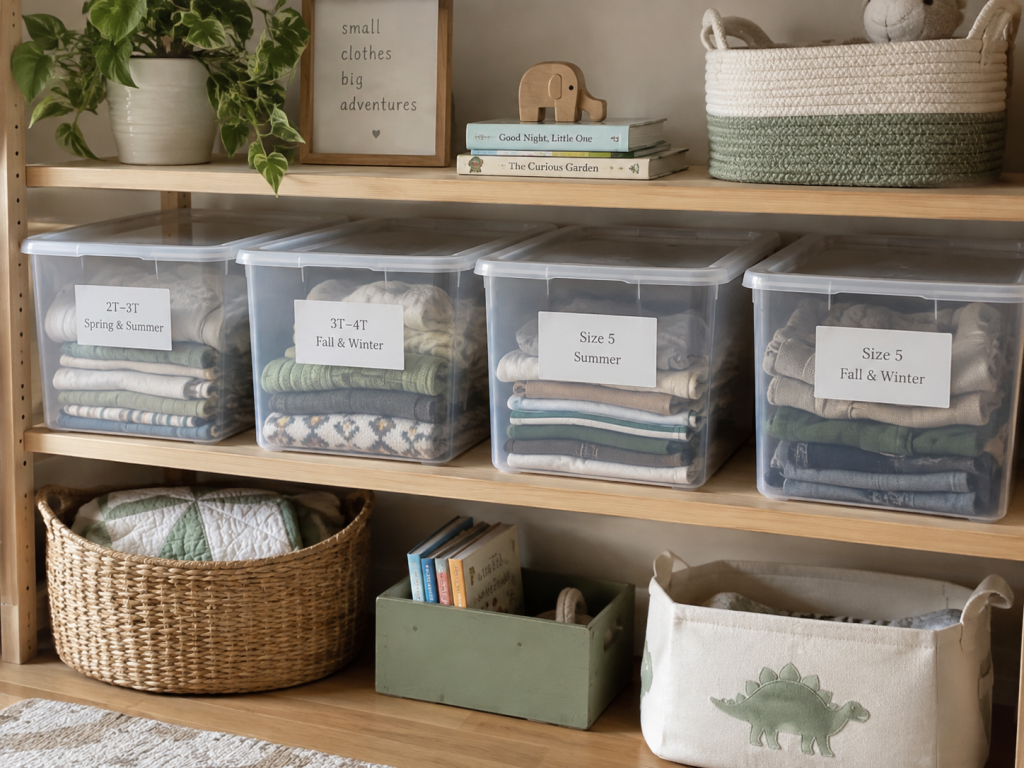
Choose Storage Based on Where the Clothes Will Live
The best container depends less on what looks pretty and more on where it is going to sit. If the clothes will be stored on a closet shelf, lightweight bins that are easy to pull down may be more convenient. For storage under a bed, low-profile containers make better use of the space. Clothes stored for a longer period may benefit from containers that keep dust out and stack securely. The important part is not buying a matching set of expensive organizers. It is choosing something that fits the space you already have. Try not to make every container too heavy. A huge box packed with several sizes of clothing may save space on paper, but it becomes awkward every time you need something from the bottom. Smaller, clearly labeled containers are often much easier to live with.Keep Only the Next Useful Size Within Easy Reach
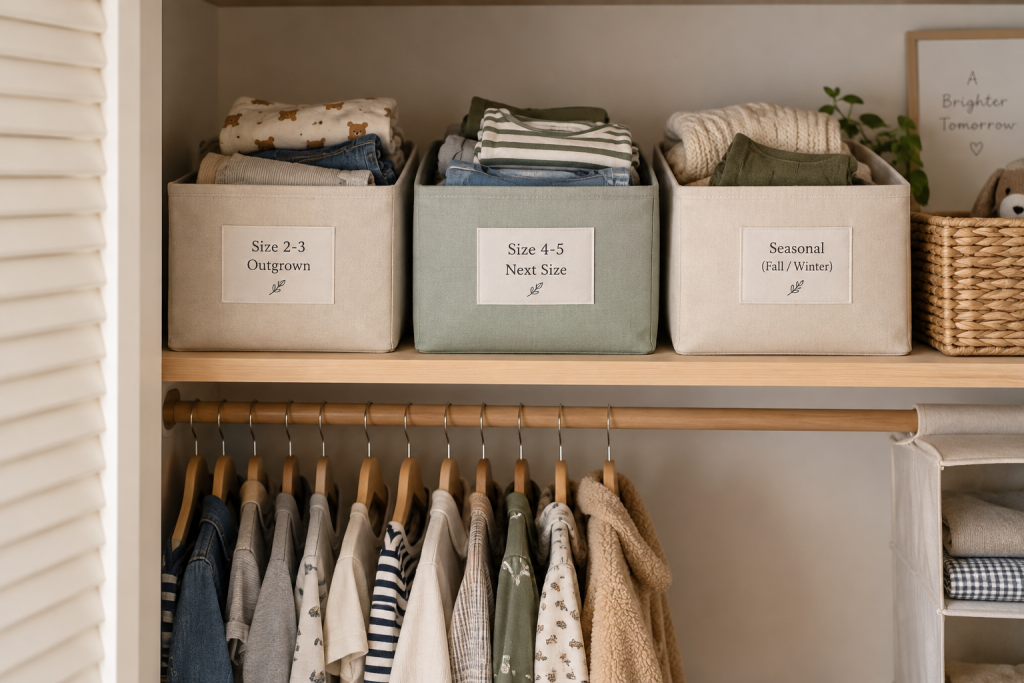
Not every saved outfit needs to stay in the child’s everyday closet. If you are keeping clothing that will not fit for another year or two, moving it to a less valuable storage area can free up a surprising amount of space. Keep the next likely size somewhere reasonably accessible. Anything much further ahead can live higher up, under a bed, or in another dry storage area until it is closer to being useful. This works especially well alongside a simple everyday closet system. If the clothes currently being worn are getting mixed with future sizes, the related guide How to Organize Kids’ Clothes by Size in a Small Closet shows how to separate clothes that fit now, the next size, and outgrown pieces.Be Careful With “Just in Case” Clothes
This is where storage can quietly get out of control. A perfectly good shirt can be difficult to let go of simply because it still has life left in it. But keeping something and actually planning to use it again are not always the same thing. If there is no younger child who may wear the clothes, no sentimental reason to keep them, and no clear future use, passing them along can make more sense than storing them indefinitely. The same is true for duplicates. Saving ten nearly identical everyday T-shirts in the same size may not be necessary even if all ten are still usable. Storage space is useful too. Keeping fewer, better pieces often makes the clothes you saved much easier to find later.Keep clothes because they have a future purpose, not simply because there is still room in the box.
Leave Yourself a Clue for Later
Once everything is packed, take a quick photo of the finished boxes with their labels visible. That tiny step can save a lot of searching later. You do not need a spreadsheet or complicated inventory. A photo on your phone showing which box contains which size may be enough to remind you what you already have before buying more clothes. It is particularly helpful when the storage containers are in a garage shelf, high closet, or another part of the house that you do not see every day.When It Is Time to Open the Boxes Again
When your child is getting close to the next size, pull that container out before shopping for a new season. Wash anything that needs refreshing, check that the clothes still make sense for the season, and move the usable pieces into the everyday closet. Children do not always move through clothing sizes at exactly the pace we expect, so some saved pieces may end up being the wrong season when they finally fit. That is normal. The point of organizing outgrown clothes is not to create a perfect system that predicts the future. It is simply to make sure that when you need those clothes again, you can actually find them.A small collection of clean, clearly labeled clothing is much more useful than six mystery bags tucked into different corners of the house.
Sort what is worth keeping, give each size a clear home, and let the rest move on. Your closets will have a little more breathing room — and future you will know exactly where to look.