
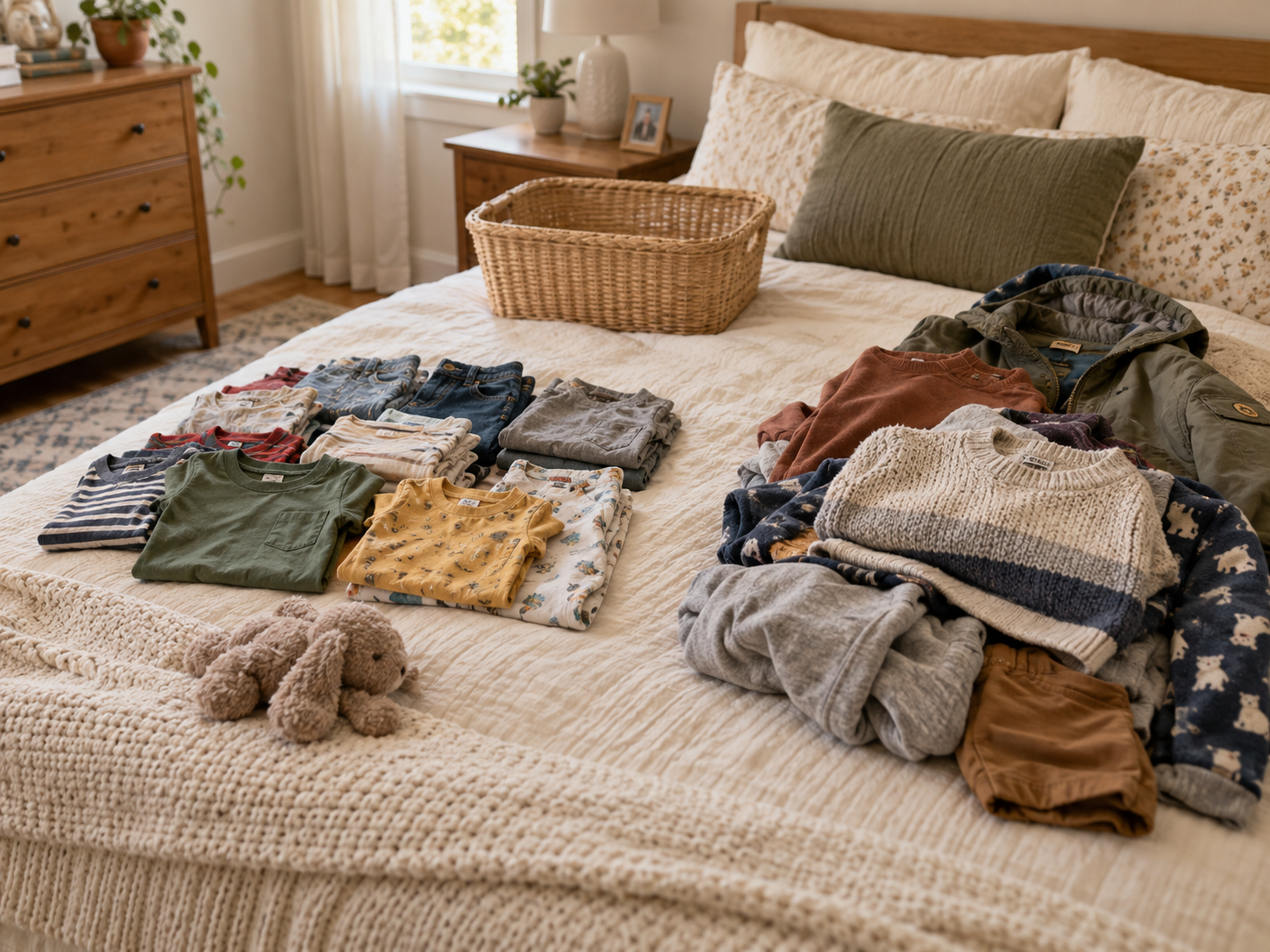
Hand-me-down clothes are one of those things that can be incredibly helpful and surprisingly overwhelming at the same time.
A bag arrives from a cousin, a friend, or an older sibling, and suddenly there are tiny jeans, winter coats, pajamas, and three different sizes of T-shirts sitting in the middle of the room. Some of them may fit next month. Some may not fit for two years. And a few may already be too small by the time you open the bag. The easiest way to organize hand-me-down clothes is to deal with them before they disappear into random drawers and storage boxes. You do not need a complicated inventory system. You just need to know what fits, when it might fit, and whether you actually want to keep it.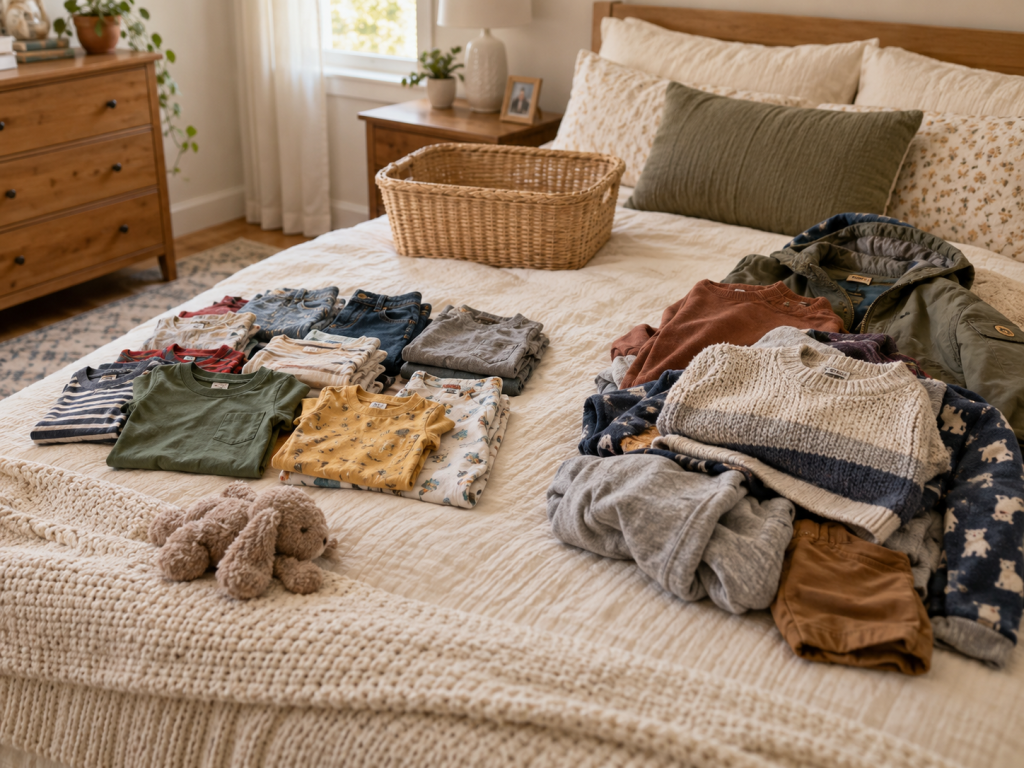
Open the Bag Before It Becomes Part of the Furniture
It sounds silly, but this is where the trouble usually starts. A bag of clothes gets placed beside a dresser with the plan to sort it “later.” Then later becomes next weekend, and next weekend becomes next month. By the time someone finally opens it, the clothes inside have become one more mystery pile. If possible, go through hand-me-downs soon after they arrive. You do not have to wash and fold everything immediately. Just do the first quick sort.For the first pass, ask only three things:
Will my child wear this?
Is this the right general size range?
Is it in good enough condition to keep?
Anything that clearly does not work can leave the pile right away.
That makes every step after this much easier.
Do Not Sort by Age Alone
Clothing labels can be helpful, but they are not always consistent. One brand’s 4T can look almost identical to another brand’s 5T. A pair of pants may be marked for the right age but have a completely different waist or length. That is why size labels should be treated as a starting point rather than a perfect rule. If two pieces look noticeably different even though the labels match, place them with the clothes they are most likely to fit alongside. This is especially useful with jeans, pajamas, coats, and anything that has obviously shrunk after being washed many times.Think in practical groups, not perfect labels. The goal is to find the clothes when they are useful, not to create a perfectly cataloged wardrobe.
Season Matters Almost as Much as Size
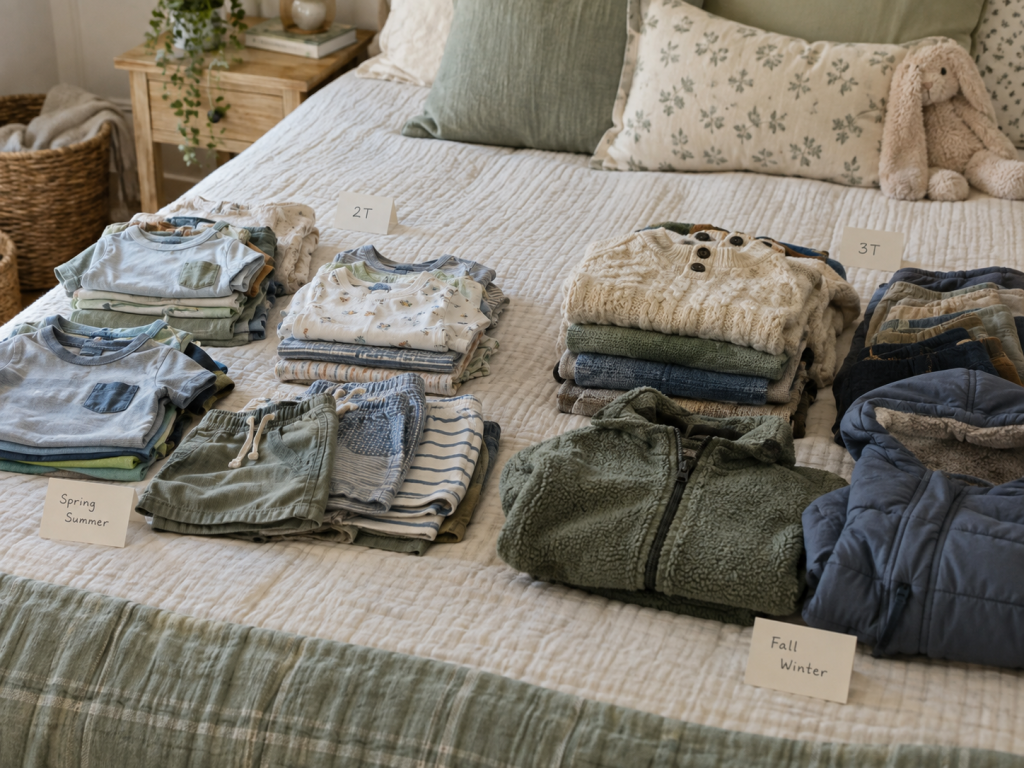
A thick winter coat in the correct size is not very useful if your child reaches that size in the middle of summer. This is one reason hand-me-downs can pile up even when everything seems carefully labeled. After sorting by approximate size, take a quick look at season.| Clothing Type | Think About |
|---|---|
| Shorts & T-shirts | Will this size likely fit during warm weather? |
| Coats & Sweaters | Will your child still be in this size when colder weather arrives? |
| Pajamas | Are they light or warm enough for the likely season? |
| Shoes | Are they likely to fit before the style becomes seasonally impractical? |
Keep Only the Clothes You Would Actually Reach For
Free clothes can be surprisingly hard to let go of. A shirt may be perfectly usable, but that does not mean it needs to live in your house for the next two years. If you already know you would never choose a certain style, keeping it because it was free only turns the decision into a future problem. The same goes for duplicates. If you already have plenty of pajamas in the next size, another eight pairs may not make daily life easier. They may simply take up storage space. Keeping hand-me-downs works best when the clothes you save are pieces you genuinely expect to use.Useful beats abundant. A smaller box of clothes you actually like is usually better than several boxes you will need to sort again later.
Create a “Next Up” Spot
Not every future size needs to be stored far away. If your child is getting close to the next size, keep those pieces somewhere you can check easily. A small shelf, drawer, or labeled bin can become a simple Next Up zone. That way, when sleeves start getting short or waistbands begin feeling snug, you already know where to look. Clothes that are much larger can stay in longer-term storage. If your child’s current closet is already crowded with several sizes, this guide may help: How to Organize Kids’ Clothes by Size in a Small Closet.Label the Box for the Person Who Opens It Later
A label such as Kids Clothes feels helpful when you are packing the box. It is much less helpful a year later. Future you needs a little more information. A simple label like this is usually enough:4T–5T Spring / Summer
Or:Size 6 Fall / Winter
You do not need a spreadsheet unless you enjoy keeping one. The label only needs to save you from opening four boxes to find one sweater.Wash Before Long-Term Storage
If the clothes have come from another home, washing them before long-term storage makes sense even when they look clean. It also gives you one last chance to notice stains, stretched fabric, missing buttons, or anything else you missed during the first sort. Make sure everything is completely dry before packing it away. Then fold the pieces loosely enough that you can remove one item later without disturbing the entire box. If you are storing clothes for another child rather than simply waiting for the next size, you may also want to read: How to Store Outgrown Kids’ Clothes Without Taking Up Too Much Space.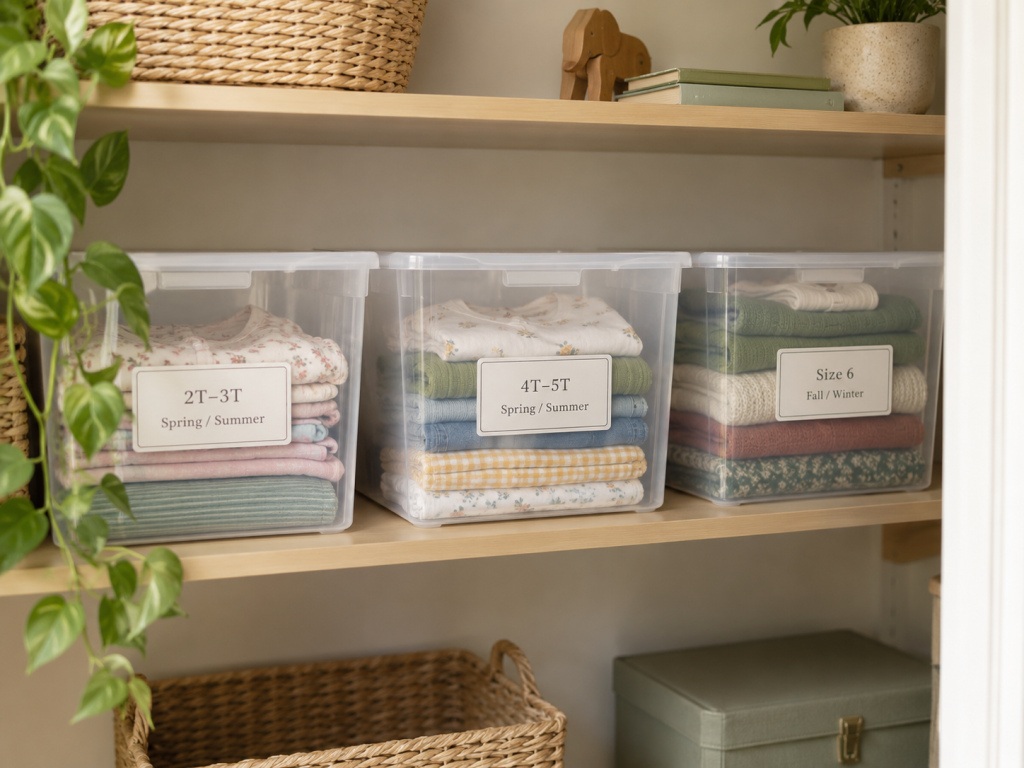
Do a Quick Check Before Buying the Next Size
This is where an organized hand-me-down system starts paying off. Before buying a new batch of clothes because your child has grown, check the next-size box first. You may already have three pairs of jeans, several pajamas, or a perfectly good jacket waiting there. It is much easier to notice what is missing when you can see what you already own. That can also prevent the familiar problem of buying something and discovering an almost identical piece in storage a week later.Before shopping for the next size:
Open the box.
Pull out what still makes sense.
Notice what is actually missing.
Then shop only for the gaps.
When Hand-Me-Downs Start Taking Over
If several boxes of future clothes are starting to fill a small closet, the problem may not be the closet itself. It may simply be holding too many things that do not need to be there yet. This guide on making more room in a small kids’ closet without buying more storage shows how to free up space before adding more baskets or organizers. The best hand-me-down system is not the one that saves every piece. It is the one that lets you find the right clothes at the right time without turning storage into another household project.Keep the clothes that are likely to be useful, label them well enough to recognize later, and let the rest move on.
That makes the next growth spurt a little easier to handle — and keeps those helpful bags of hand-me-downs from becoming permanent clutter.