
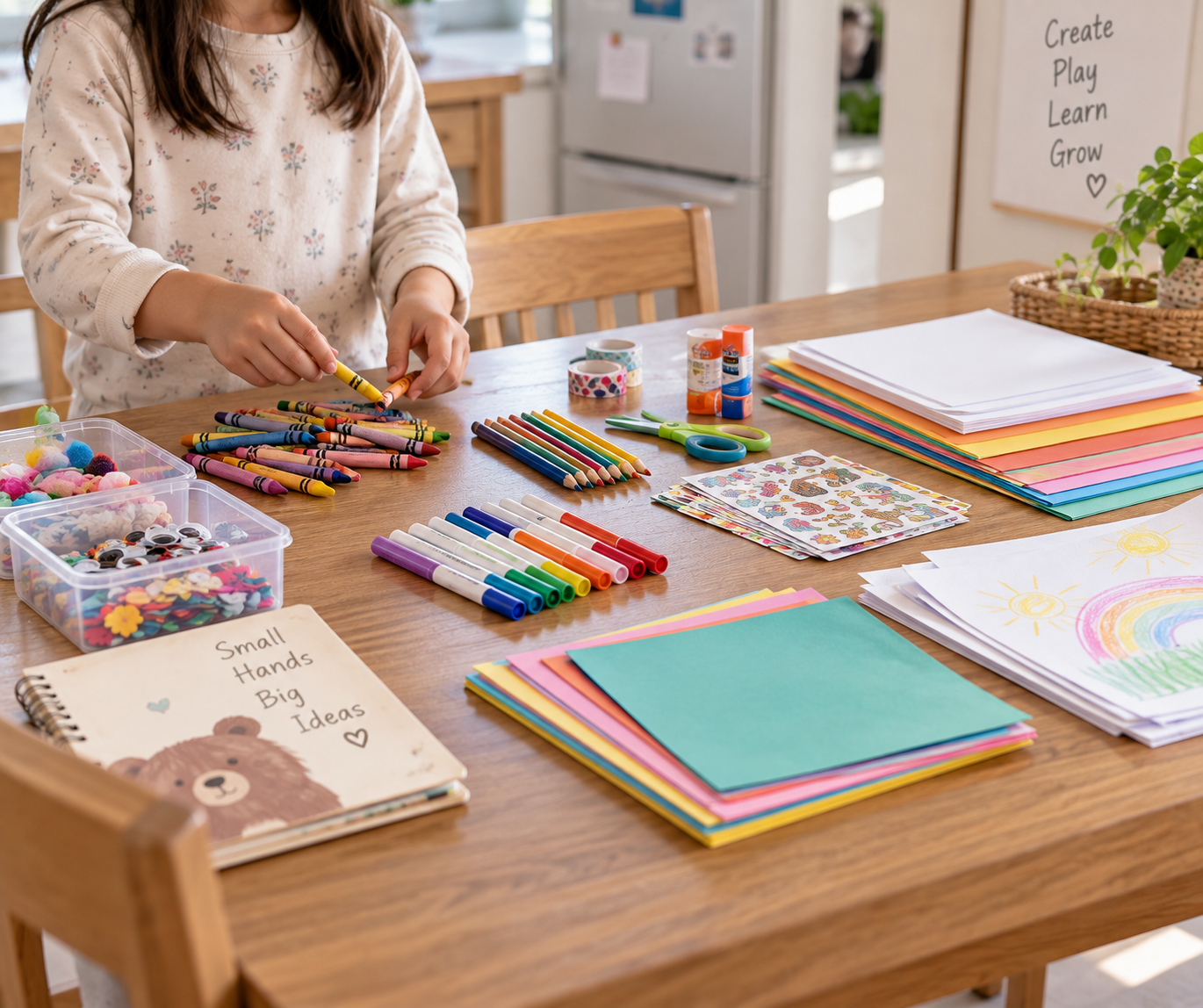
You do not need a craft room to end up with an impressive amount of children’s art supplies.
A few crayons become two boxes of markers.
Paper appears in several sizes.
There are stickers, paintbrushes, glue sticks, half-finished projects, and tiny scraps of construction paper that someone is absolutely certain cannot be thrown away.
In a small home, the trick is not creating a miniature art store.
It is keeping enough supplies accessible for children to actually use them without allowing the collection to spread into every drawer.
Start With What the Kids Actually Use
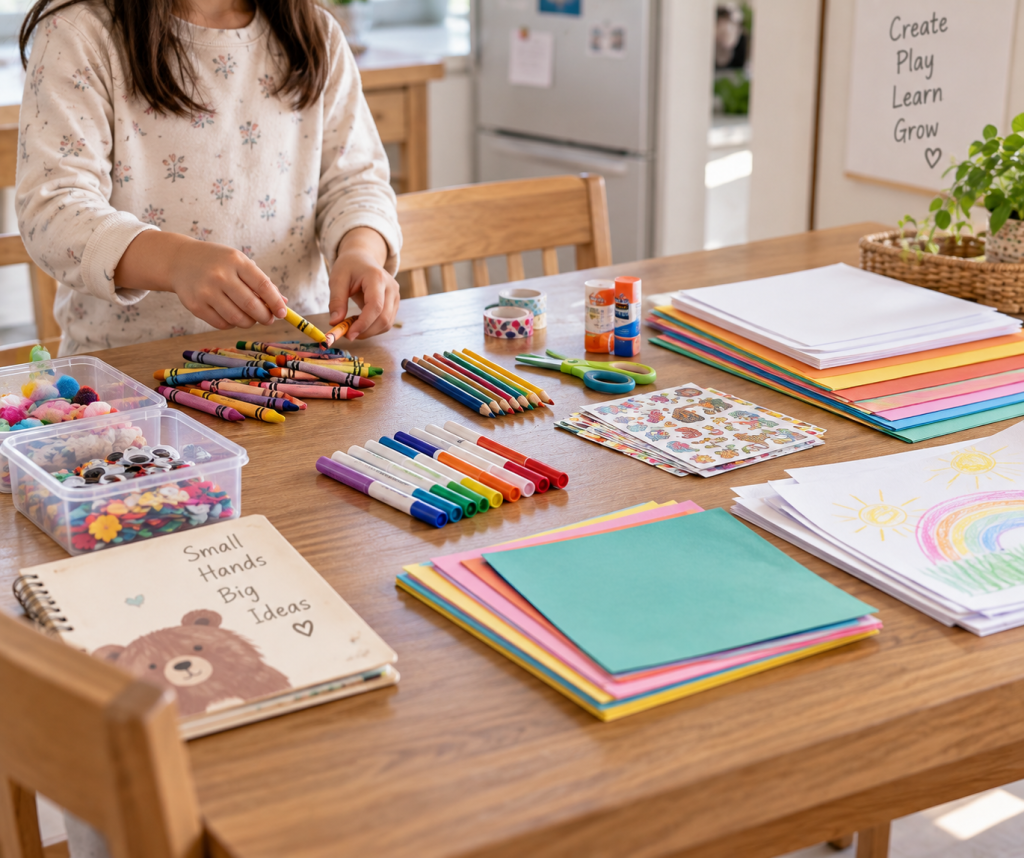
Put the art supplies together and notice what gets reached for regularly.
Crayons, washable markers, pencils, paper, stickers, and a glue stick may cover most everyday drawing and crafting.
Special supplies used only occasionally do not need to take up the easiest space.
Keep Everyday Supplies Together
Art time is much easier when the basic supplies can be picked up in one trip.
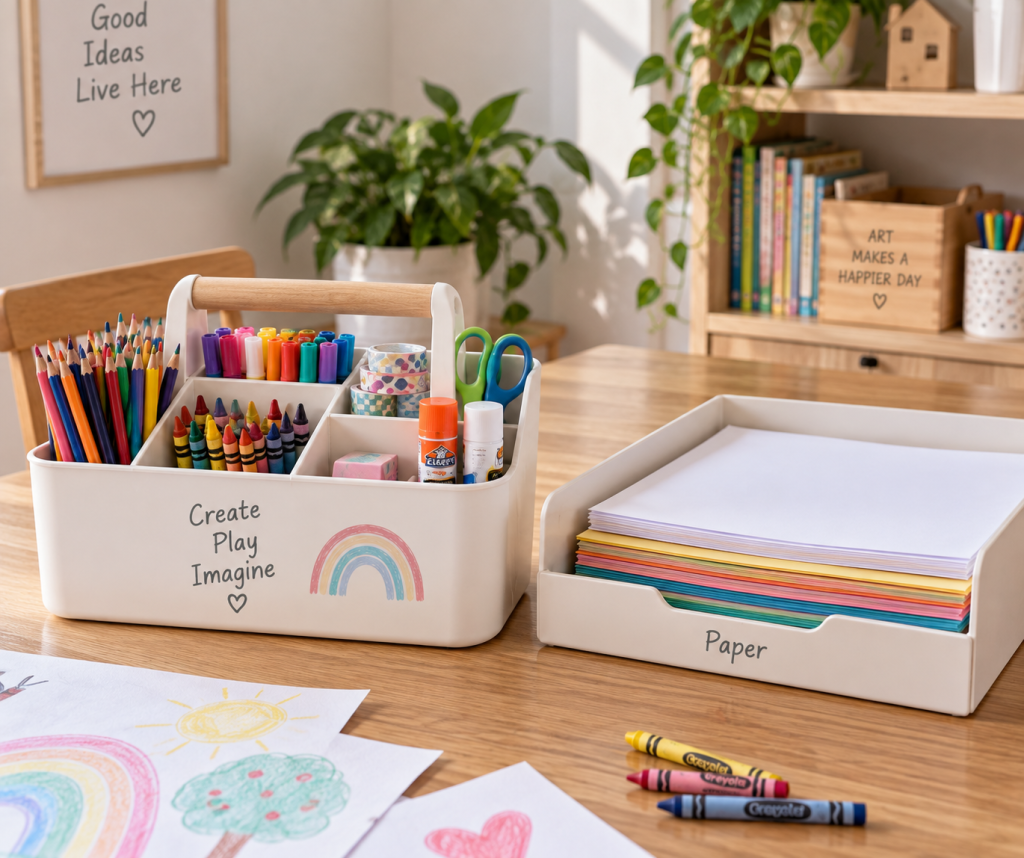
A small handled caddy, shallow basket, or portable container works well for the things children use most often.
It can move from a shelf to the kitchen table and back again without requiring a permanent craft station.
This is especially useful in homes where the dining table also needs to become a homework desk, snack table, and art space depending on the hour.
If children have to dig through twenty supplies to find one marker, the container has probably become storage rather than a usable art kit.
Paper Needs Its Own Flat Home
Paper quickly becomes messy when it is stored upright beside toys or squeezed into a deep basket.
A shallow drawer, document tray, or low shelf keeps paper flat and makes it easier to see when the supply is running low.
Keep plain drawing paper easy to reach.
Specialty paper can live somewhere less accessible until it is actually needed.
Paint and Messy Supplies Can Be Less Accessible
Not every art supply needs to be available at child height all day.
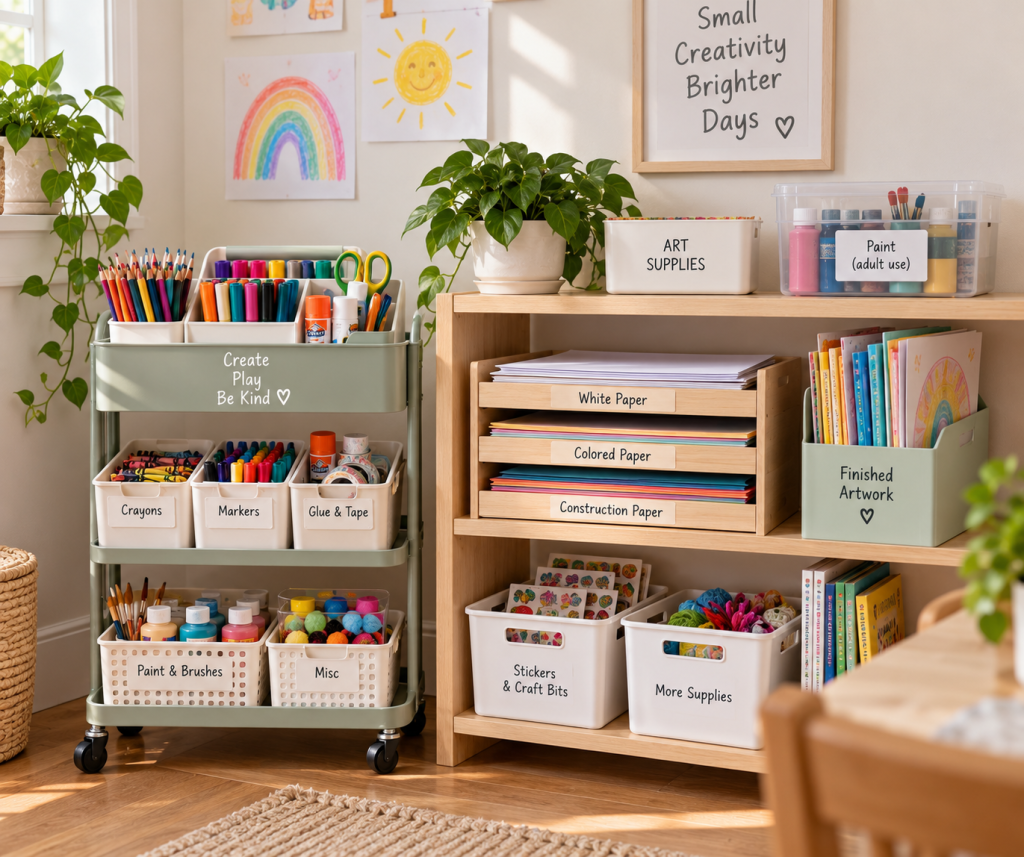
Paint, permanent markers, large bottles of glue, glitter, or anything that requires adult supervision can live on a higher shelf or in a separate container.
This also keeps the everyday art area from becoming overcrowded.
The child-accessible section can stay focused on supplies that are genuinely easy to use and put away.
Finished Artwork Needs a Limit Too
The supplies are only half of the problem.
Then come the masterpieces.
A small tray or folder for recent artwork gives children somewhere to place finished pieces instead of covering every counter.
When that space fills up, go through it together.
Some pieces can be displayed, some saved, and some eventually recycled.
There is no need to make the decision the moment a picture is finished.
A temporary holding place makes the process much easier.
Do Not Turn Organization Into Another Craft Project
Matching containers and beautiful labels can be fun, but children’s art supplies change constantly.
Markers dry out.
Paper gets used.
A new school project suddenly introduces a completely different material.
Leave the system flexible enough to change with the kids.
A simple basket that gets used every week is more valuable than a perfectly labeled organizer nobody wants to put away.
The best small-space art setup is one that can appear when creativity starts and disappear again when dinner needs the table.
Leave a Reply