
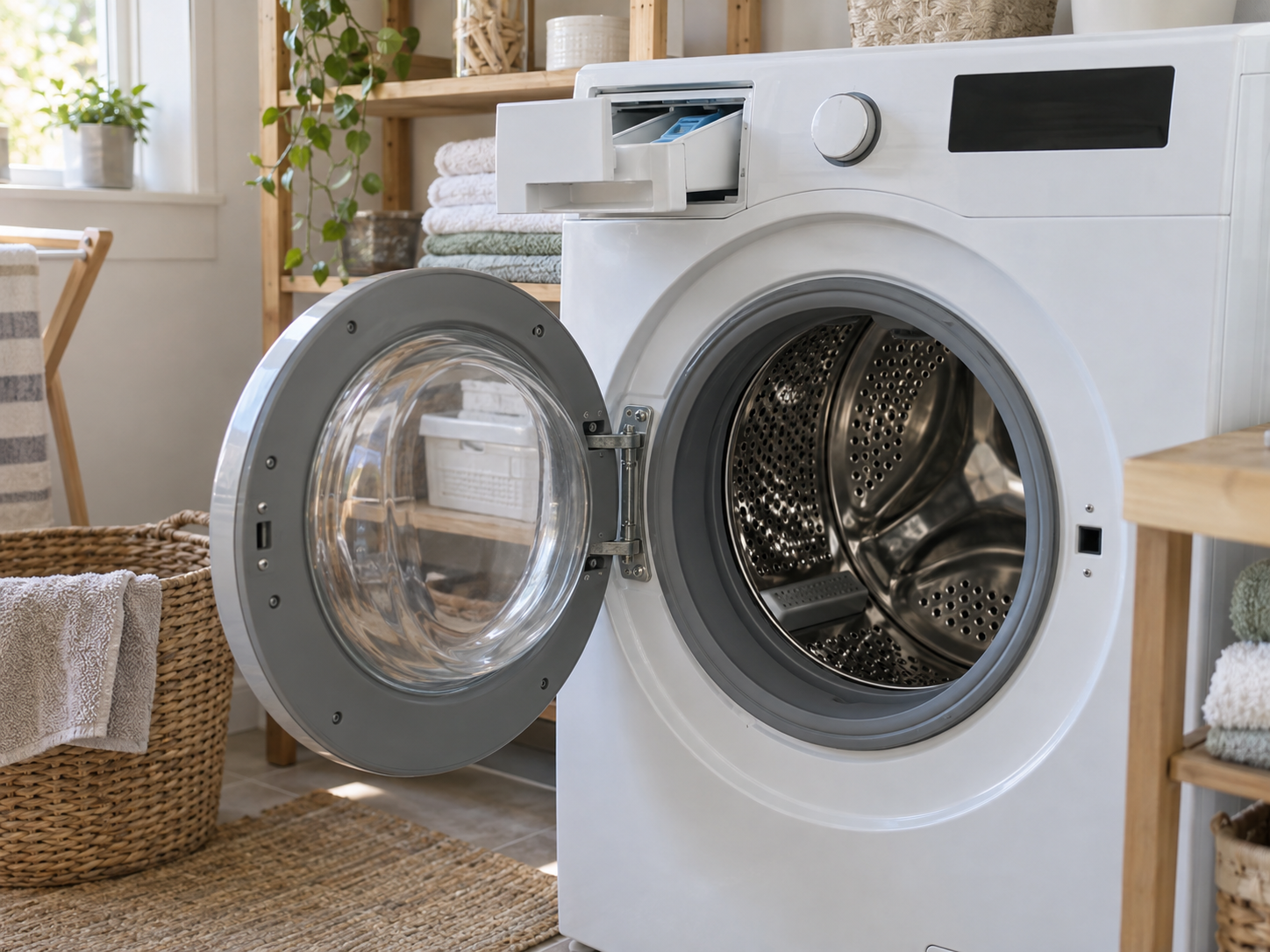
Cleaning the washing machine and opening the door to find that familiar musty smell still hanging around is frustrating.
It can feel as though the cleaning cycle did absolutely nothing.
But quite often, the drum itself is not the only place holding moisture, detergent residue, and lint.
If your washing machine smells after cleaning, a few less obvious areas are worth checking before running another cleaning cycle.


The Smell May Not Be Coming From the Drum
The inside of the drum is the easiest part of the washer to see, so naturally it gets most of the attention.
But water and detergent travel through several other parts of the machine during every load.
Small amounts of moisture can remain behind after the laundry is finished.
That means the smell may be coming from somewhere nearby rather than from the shiny metal drum itself.
Check the Rubber Door Seal Carefully
Front-loading machines have folds around the door seal where water, lint, hair, and tiny pieces of fabric can collect.
From the outside, the seal may look perfectly clean.
Gently pulling the folds apart can reveal damp areas that were easy to miss.
Use a soft cloth and follow the cleaning directions for your machine.
Afterward, dry the area rather than leaving it wet.
One small detail matters: a surface can be clean and still smell if it stays damp for long periods.
The Detergent Drawer Can Hold More Residue Than You Expect
Detergent and fabric softener do not always rinse away completely.
Over time, a slippery layer can build up inside the drawer and in the space behind it.
If the drawer is removable, check the manufacturer’s instructions before taking it out.
Clean the parts that are designed to be removed and make sure they are fully dry before putting them back.
It is also worth looking inside the opening where the drawer normally sits.
That hidden area is easy to forget.

Take a Look at the Filter Area
Some washing machines have an accessible drain or pump filter that catches lint and small objects.
When water does not drain completely or debris remains trapped, unpleasant smells can develop around that area.
Filter locations and cleaning methods vary quite a bit between machines, so this is one place where the manual is genuinely useful.
Do not force open a panel or part that is not designed for routine access.
Too Much Detergent Can Work Against You
More detergent does not always mean cleaner laundry.
When more product is used than the machine can rinse away effectively, residue may remain on internal surfaces and fabrics.
That leftover film can hold moisture and make a freshly cleaned washer begin smelling again sooner than expected.
Check the detergent directions and the washer instructions rather than automatically filling the dispenser to the top.
Let the Machine Dry Between Loads
A washer spends a lot of time filled with water, so giving the inside a chance to dry can make a noticeable difference.
After the final load of the day, remove the laundry promptly and leave the door or lid open when it is safe and practical to do so.
Leaving the detergent drawer slightly open can also help trapped moisture escape.
In a home with young children, keep safety in mind and make sure an open appliance is not accessible to them.
When Another Cleaning Cycle Is Not the Answer
If the washer smells clean immediately after a cleaning cycle but the odor returns quickly, repeating the same cycle over and over may not solve the real problem.
Instead, work through the places that stay damp or collect residue:
the seal, detergent drawer, accessible filter area, and the spaces where water tends to sit.
And never mix different cleaning products in an attempt to make them stronger.
Follow the instructions for the appliance and the cleaning product you are using.
A washing machine does not need to smell like perfume to be clean.
A neutral, fresh interior that dries properly between loads is a much better goal.
Leave a Reply