
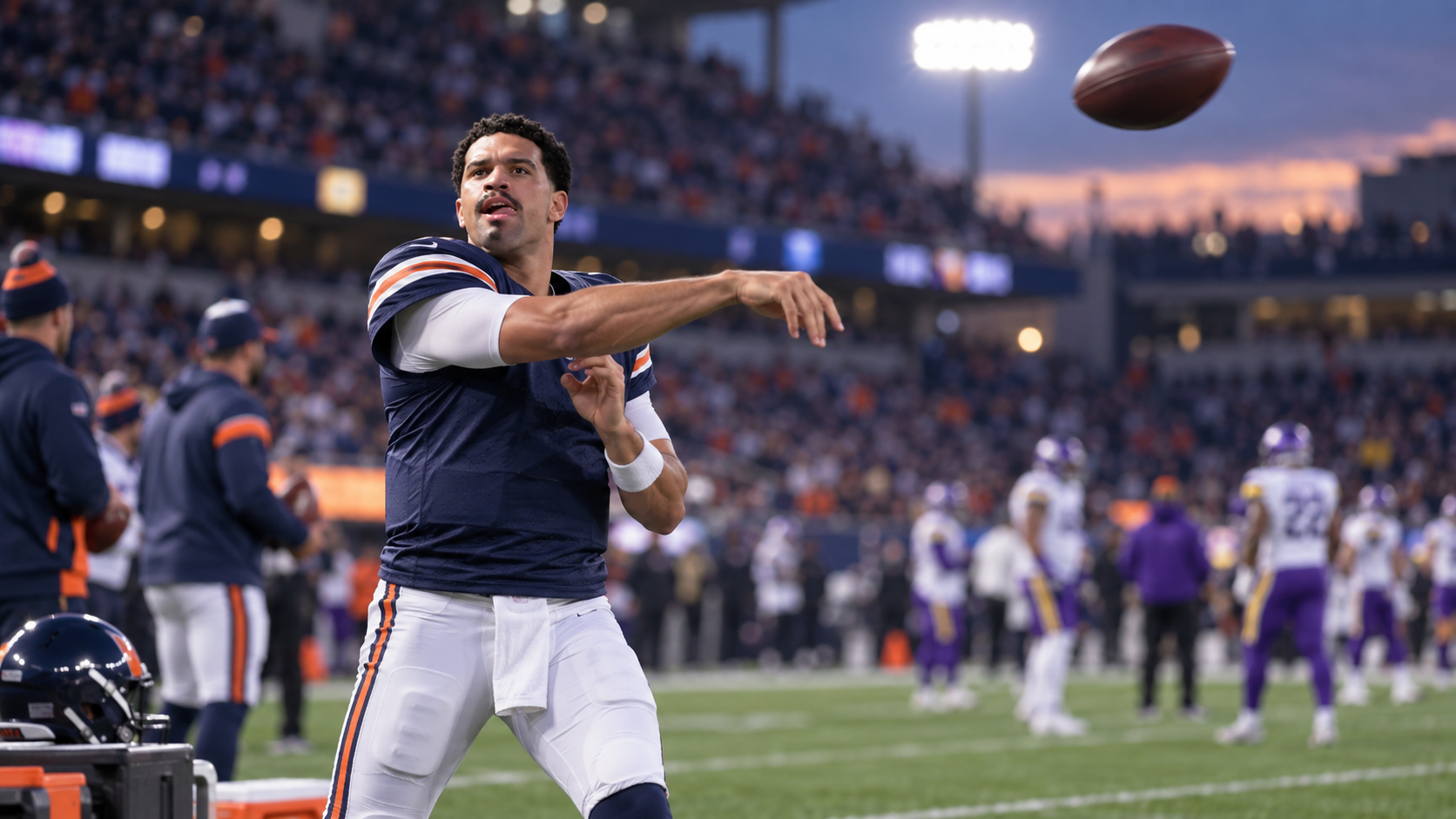
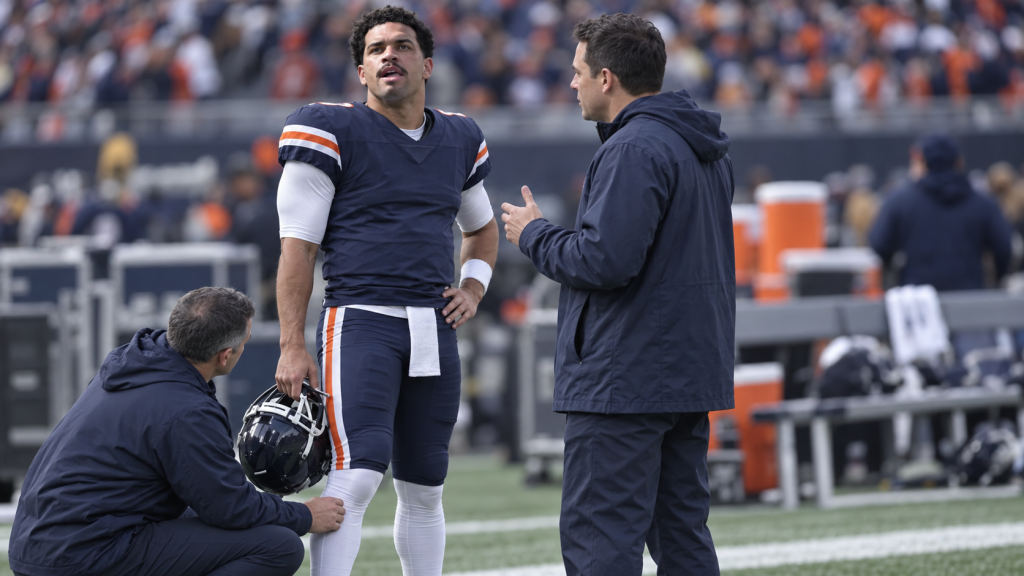
 AI generated
When searches for Caleb Williams injury update, “what happened to Caleb Williams,” and “is Caleb Williams hurt” begin climbing at the same time, fans are usually looking for one thing: a clear answer about whether the Chicago Bears quarterback can play the next game.
Unfortunately, NFL injury news rarely arrives as one simple yes-or-no announcement. A player can leave a game, appear uncomfortable, receive treatment, return to the sideline, participate in practice on a limited basis, and still carry a game designation several days later.
That is why it helps to separate the situation into a few different questions: What actually happened? What has the team officially reported? How much is Williams practicing? And what happens at quarterback if he cannot take his normal workload?
Those details are much more useful than trying to judge an injury from a short television replay or a social-media clip.
Why “What Happened to Caleb Williams?” Is a Different Question From “Will He Play?”
The first thing to understand with an NFL injury story is that the moment a player appeared hurt and his eventual game status are not necessarily the same thing.
A quarterback can be evaluated during a game for a relatively minor issue and return quickly. Another player may finish a game but wake up the next morning with enough soreness or swelling to affect practice.
That is why the most useful timeline begins with the game itself but does not end there.
If you are trying to understand a Williams injury story, look for details such as:
- whether he left the field or finished the game,
- whether medical staff evaluated him on the sideline or away from the field,
- whether he returned after the evaluation,
- what the Bears listed on the first official practice report,
- and whether his practice participation improved as the week progressed.
That sequence tells you far more than a headline saying only that Williams was “hurt.”

Do Not Treat Search Terms as a Medical Diagnosis
One notable part of the current search interest is the number of people typing phrases such as “Caleb Williams hamstring” and “Caleb Williams hamstring injury.”
That does not, by itself, establish a diagnosis.
Google searches often reflect what fans heard during a broadcast, saw in a social-media post, or read in an early report. Those searches can spread faster than an official injury update.
The more dependable information comes from the Bears’ official injury reporting and statements from the team or player after medical evaluation.
This distinction matters because different lower-body issues can look very similar on television. A player slowing down, stretching a leg, or favoring one side does not tell viewers enough to determine whether the problem involves a hamstring, calf, knee, ankle, or simply temporary tightness.
The useful question is not “What does the replay look like?”
It is “What did the Bears list on the official injury report, and how did Williams participate in practice afterward?”
The Practice Report Usually Tells the Story Better Than Rumors
NFL practice reports are one of the clearest ways to follow an injury during the week.
The important terms are straightforward:
DNP — Did Not Participate: The player did not participate in practice.
Limited: The player practiced, but not with a full normal workload.
Full: The player participated fully in practice.
One day by itself does not always tell the whole story.
For example, a veteran or important starter may receive a lighter workload early in the week before practicing more extensively later. On the other hand, a player moving from limited work to no participation can signal that the situation deserves closer attention.
The trend across several practices is often more informative than the first report.
What Questionable, Doubtful and Out Actually Mean
Closer to game day, the injury discussion usually shifts from practice participation to the official game-status designation.
If Williams receives a designation, the wording matters.
Questionable means there is uncertainty about whether the player will be available.
Doubtful indicates a much stronger concern about availability.
Out is the clearest designation: the player will not play.
Fans should also remember that a player being active does not automatically mean he will be completely unrestricted.
For a quarterback, coaches may alter play-calling if mobility is limited. Designed runs can disappear, movement outside the pocket may be reduced, and protection plans can become more conservative.
Why Bears Fans Are Searching for the Backup Quarterback
Search interest in “Bears backup QB,” “Tyson Bagent,” and similar terms tends to rise whenever there is uncertainty surrounding the starting quarterback.
That makes sense.
If Williams is limited or unavailable, the next question immediately becomes who would take the snaps and how much the offense might change.
The current answer should always be checked against the Bears’ latest active roster and depth chart because backup roles can change during a season.
What is more useful for fans than simply knowing the QB2’s name is understanding how the offense might adapt.
The playbook may become more selective
A backup quarterback does not always receive exactly the same menu of plays as the starter.
Coaches may emphasize concepts that the backup has practiced most frequently, quick throws, easier reads, and protection schemes designed to keep the quarterback comfortable.
The running game can become more important
If a team is forced to change quarterbacks unexpectedly, leaning more heavily on the running game can reduce the number of obvious passing situations.
That can also affect fantasy football expectations and how opposing defenses approach the game.
Protection becomes an even bigger storyline
A backup entering because the starter is injured often places additional attention on the offensive line.
If the original injury occurred under pressure, analysts will naturally examine whether the Bears can reduce hits on whichever quarterback is playing.
How an Injury Could Change a Bears vs. Vikings Matchup
The search data also shows strong interest in Vikings vs Bears, Bears scores, Vikings scores, player stats, and the NFC North.
That context is important because quarterback health does not exist in isolation.
If Williams is playing through any limitation, the matchup itself can determine how visible that limitation becomes.
A defense that sends pressure frequently may force more movement in the pocket. A defense that successfully stops the run may create more long-yardage passing situations. Conversely, if Chicago can stay ahead of the chains, the quarterback may not have to extend as many plays.
That is why a useful injury update should eventually answer not only “Is he playing?” but also:
Can he move normally?
Is the Bears offense using its usual playbook?
Is the opponent able to force him outside structure?
Is Chicago protecting him differently?
Do Not Confuse “Active” With “100 Percent”
This is one of the most common mistakes when following NFL injuries.
If Williams is active for a game, it simply means he is available to play.
It does not automatically mean the issue that placed him on the injury report has completely disappeared.
Watch the opening drives.
Is he moving comfortably when pressure arrives? Is he willing to scramble? Are designed quarterback runs still part of the offense? Does he look comfortable driving the ball on throws outside the numbers?
Those observations cannot diagnose an injury, but they can help explain whether Chicago is modifying the offense around the quarterback.
Fantasy Football Players Should Wait for the Last Useful Information
An injury involving a starting quarterback does not affect only the quarterback.
Wide receivers, tight ends, running backs, and even the opposing defense can all be affected by who starts and how healthy the quarterback is.
The mistake is making a fantasy decision based on the first headline of the week.
A much better sequence is to check the final practice participation, the official game designation, any credible pregame reports, and then the inactive list when it becomes available.
That is especially important when a game is scheduled later in the day, because replacing a player becomes harder once earlier games have already started.
Where to Check the Latest Caleb Williams Status
For a fast-moving injury story, the order of sources matters.
Start with official Chicago Bears communications and the league’s official game-status information.
Then look for reporting from credentialed Bears beat reporters who are present at practice and press conferences.
National NFL reporters can also be useful when they have sourced information about imaging, expected availability, or pregame decisions.
Social posts that simply repeat another account’s claim without identifying a source should come much later in that hierarchy.
The shortest version:
Game footage tells you something happened.
The practice report tells you how much he is working.
The game designation tells you whether availability is in doubt.
The inactive list gives you the final pregame answer.
Why the NFC North Makes the Story Bigger
Searches for Williams are also appearing alongside NFC North, Vikings, Bears standings, and Bears schedule queries.
Quarterback availability becomes even more important in a division race because a head-to-head game can affect both teams at once.
A Bears win over a division opponent is not simply another entry in the overall record. It can also matter later when divisional and conference tiebreakers are calculated.
That is one reason an injury question surrounding a quarterback can generate far more interest before a Bears-Vikings game than it might before a less consequential matchup.
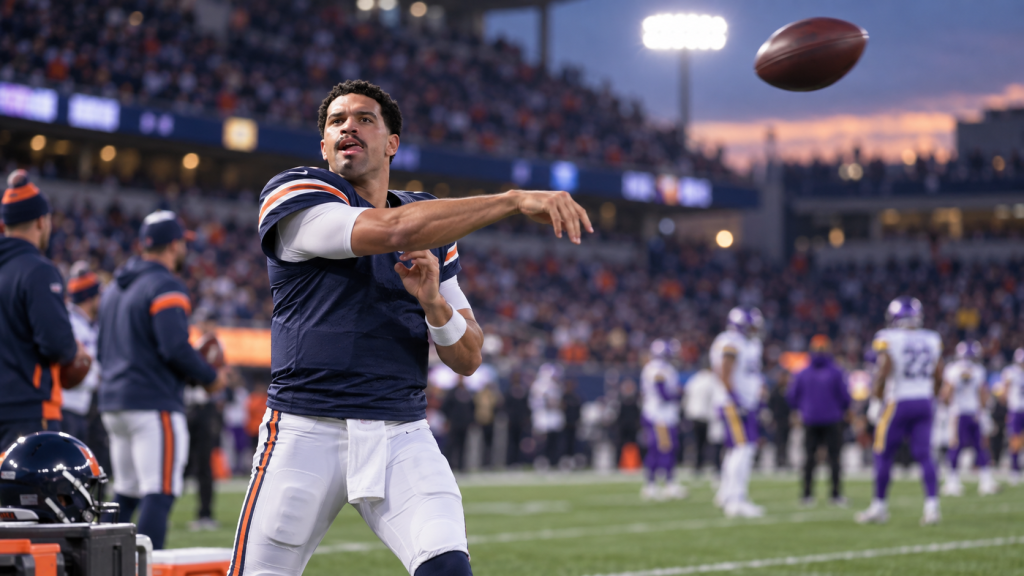 AI generated
What to Watch Next
The most useful next update on Caleb Williams will not necessarily be another dramatic headline.
It may simply be a change in his practice participation.
If he progresses from no work to limited participation and then to full participation, that tells a very different story from a player whose workload remains restricted throughout the week.
The same applies to the backup quarterback conversation.
Rather than assuming a replacement based on a familiar name, check which quarterbacks are currently on the Bears roster, who is receiving practice work, and who is active on game day.
For Bears fans, the question is ultimately simple: Will Caleb Williams be healthy enough to run the offense the way Chicago wants to run it?
The official injury report, practice participation, game designation, and final active roster provide a much clearer answer than speculation based on a single replay.
Leave a Reply